
For 15 years, Lawndale Christian Legal Center (LCLC) has been guiding youth through, and away from, Chicago’s justice system. By transforming the way young people in North Lawndale interact with the criminal justice system from arrest to trial, incarceration to release, LCLC has managed to reduce the rearrest rates among its clients to just 15%.
Restorative justice works, and LCLC is proving it. And next year, they’ll be taking another big step toward making restorative justice the standard instead of the exception, first in Chicago’s North Lawndale, and then hopefully across the nation.
We sat down to chat with LCLC co-founder Cliff Nellis to learn more about where LCLC has been, and what’s coming next.

Hi Cliff! So LCLC is about to celebrate its 15th anniversary. But the story of the legal center started a lot more than 15 years ago, didn’t it?
Absolutely. The Lawndale Christian Community Church had a vision long before I came along.
I was three years old in 1978 when they started the church. A little early for me to practice law.
Back then, there was a local high school football and wrestling coach who started a fellowship of Christian athletes Bible study with some of his football students and wrestlers. That’s how the church got started.
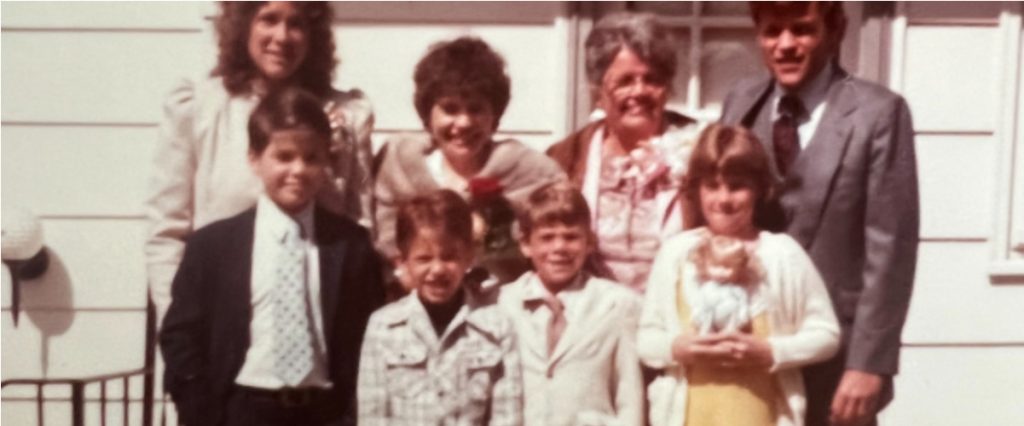
His name is Wayne Gordon – but everybody just calls him Coach.
According to the story, sometime later, Coach and the kids got to talking about how if Jesus said to love your neighbor as yourself, that probably means you need to love your neighborhood. So they gathered the church and the North Lawndale neighbors, and they had a community meeting to start identifying all the different things that the neighborhood needed. Obvious big things like healthcare, jobs, and housing, and some simpler things like a safe place to play basketball, a safe place to do laundry.
The church’s first ministry was a coin laundry.

One of the big things they said they needed was quality legal services, because when young people in Lawndale were running into the legal system, they weren’t getting good representation or advocacy. They’d get caught up in the system and never get out again. The church knew they wanted to create a legal center to help these kids, but they had a rough time getting started. When they share this story today, they joke and say: “Well, we had to wait for Cliff to grow up, get his law degree, and then cross paths with us.”
Thankfully, your paths eventually did cross – you’ve shared that story before (read how Cliff was inspired to help start LCLC here). And here you are 15 years later! You’ve learned a lot in that time. What are some of the lessons that have surprised you most?
What I didn’t really understand when I started – and what I think most people don’t realize – is that almost 100% of the people in the criminal justice system begin their contact with the system as children. They are youth, children even, in our care.
Across the nation, approximately 40%-45% of people in the system are 25 or younger right now. But nearly 100% of people older than 25 had their first contact with the system when they were under 25.
When the vast majority of the people in our system had their first contact with the system as a minor or young adult, the urgent question becomes: What are we doing to ensure these children can have successful futures instead of cycling in and out of prison for the rest of their lives? How do we break the trend? Can we do better?
It didn’t take us long to understand that the youth we have represented over the last 15 years are shouldering enormous physical, mental, and emotional stress in their daily lives. When you get close to them, their families, and our community, you understand why compassion is needed. Punitive approaches do not help – they only make hard lives harder.
Believe it or not, I was not a believer in restorative justice at first. I thought it sounded like a bunch of mamby-pamby soft-on-crime stuff that didn’t teach anyone the lessons they needed to learn.
I was wrong.
There is no greater form of accountability and justice than a justice that heals and restores everyone involved.

So LCLC steps in to give these juveniles and young adults not just a fighting chance in court, but also to surround them with holistic support so they can be connected with their community.
Exactly. Restorative justice involves learning to see that crime for its true nature: harm that’s done to other people and/or the community. And justice is repairing and healing that harm, as opposed to traditional justice, which is mostly just unrelated punishment.
In the last 15 years, I’ve learned how important it is to show there’s a way to do better for our young people and meet the social needs that are the underlying root causes of crime and rearrest. Where I grew up, in Lake Zurich, isn’t far from here – but the distance between the resources I had and the resources kids growing up in North Lawndale have is huge. Racial disparity, economic disparity, food deserts, education – the playing field is nowhere near level.
One of the most basic resources our clients often lack is housing. Housing instability plays a huge role in repeat criminal behavior and rearrest. Housing stability is an essential part of restorative justice.
And that’s why we’re so excited about The Deer Center.

That’s the building restoration/new construction that’s been going on on the corner of Keeler and 15th Street, right? What’s happening over there?
The Deer Center – its full name is the Dr. Dennis Deer Community Justice Center – it’s a game changer. It’s 15 years of our work culminating in one place, and I believe it will become a national example of how to integrate legal and social services for youth in a community-based, community-led, holistic way.
The Deer Center’s 20 apartments are specifically for men 18-25 who are at high risk of going to prison. While they live here, they’ll get workforce development, community engagement, and mental health care. When they first arrive, their rent and utilities will be sponsored so they can get their high school diploma and their driver’s license and learn a trade. They’ll get support finding a job, managing finances, restoring their credit, and starting to reliably pay their bills. We hope to help them save up for down payments on homes here in North Lawndale, so they can stay in the community, give back to the community, and start some generational healing.
We’re offering an alternative to prison for young people, because we know – we’ve proven – restorative justice can change the trajectory of their lives.
I think people like the idea of restorative justice, but sometimes struggle to see how it can actually work. But LCLC is modeling a plan that’s really working for North Lawndale, and could be recreated all over the country. You’re not just telling people what should be done. You’re showing them how to do it.
Yeah, it has to go beyond just telling people what they should do.
For example, our Juvenile Court Act has been on the books since 1899. And on paper, it’s a beautiful piece of legislation. Balanced and restorative justice are actually part of the language of the Juvenile Court Act in Illinois. Reading it, you’d think every minor getting arrested in Illinois is getting help. If they’re suffering from addiction, they’re getting treatment. If they’re homeless, they’re getting help with housing.
But that’s not the reality. And I think that’s partly because policy is often written without knowledge of the day-to-day process. Great ideas, but without implementation, legislation doesn’t become reality on the ground.
People like us – we’re on-the-ground practitioners. We know how to build a successful restorative justice program in the community. We do this every day. We’ve been doing it for 15 years.
I think the Deer Center is an opportunity to put all the hopes, hard work, tools, and vision we have for our clients to work in one place, and actively show the nation how to do better for young people in our criminal justice system.
I can’t wait for you to see it. I’m just honored to be a part of the whole thing.
The Dr. Dennis Deer Community Justice Center will open early next year. We hope you’ll join us on April 27, 2025, for a ribbon-cutting ceremony and block party as we celebrate everything LCLC has built in the last 15 years and everything that’s possible in the years ahead.

